TV Mounting Service: Costs and Process 2026
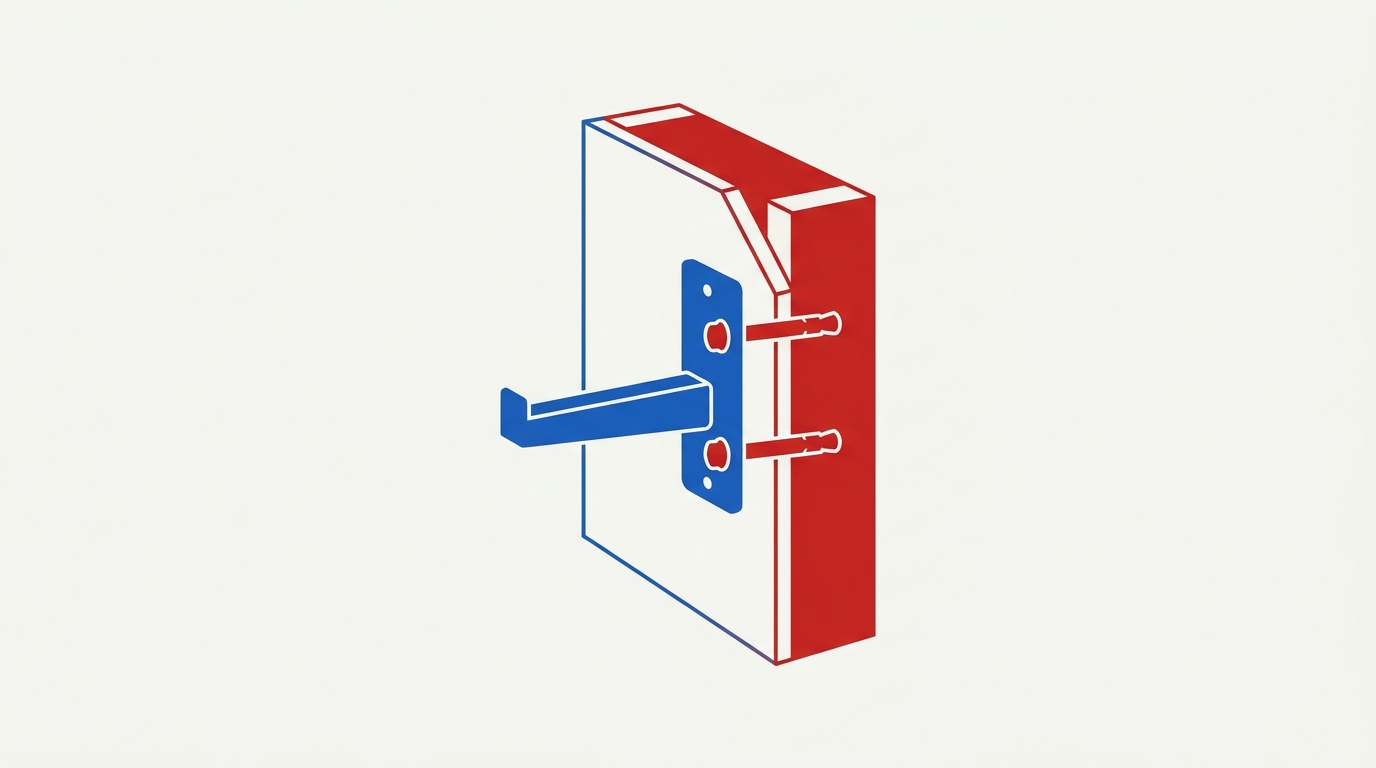
A TV mounting service is a paid visit where an installer anchors a wall bracket into structure, hangs the television on it, levels it and manages the cables. That is the whole job in one sentence. Everything that changes the price, the time on site and the risk of the mount failing comes down to one variable most articles skip: what the wall behind the TV is actually made of.
In Southern California that variable swings wide. A 2019 Irvine condo has metal studs. A 1948 Long Beach bungalow has lath and plaster over rough-sawn framing. A Dana Point patio wall is stucco over CMU block. Those three walls need three different anchors, three different drill bits and three different amounts of time. A national average price does not know which one you have.
What is a TV mounting service?
A TV mounting service is a paid visit where an installer anchors a wall bracket into structure, hangs the television on it, levels it and manages the cables. It is a labour service, not a product sale, though many providers will also supply the bracket if you do not have one.
A standard visit almost always includes locating and verifying studs or suitable structure, drilling and setting the bracket, attaching the arms or plate to the back of the TV, hanging and levelling the set, and tidying the cables so they are not hanging loose down the wall. Most installers will also connect the devices you already own and confirm you get a picture before they leave.
What a standard visit does not include is worth knowing before you book:
- Drywall repair and painting. Removing an old mount leaves holes. Patching and colour matching is a different trade.
- New electrical work. Adding an outlet behind the TV means a licensed electrician, not an installer with a drill.
- Running new circuits or in-wall power kits in some situations, depending on the wall and local code.
- Furniture assembly, media console builds and speaker calibration.
- Structural modification. If there is no stud, no blocking and no masonry where you want the TV, the answer is a different location, not a bigger anchor.
If you want the wider picture of what a full home television setup covers, including antenna, streaming device and receiver work, that is a different scope and it is laid out in TV Service Installation: What It Covers in 2026.
How much does a TV mounting service cost in 2026?
Quick TV Mounting starts at a $69 base, and bigger TVs increase the price above that base before any full-motion or multi-TV add-ons are applied. That is the one figure in this article we can stand behind, because it is ours.
We are deliberately not restating other companies' prices here. Cost guides and installer pages get updated far more often than blog posts do, and a stale number attributed to a named company is worse than no number at all. If you read a price somewhere, confirm it on that company's own page or on the phone before you plan around it.
What is more useful than a national average is knowing what moves a quote. The same television costs different amounts to hang in two houses on the same street, and these are the reasons why.
What actually pushes a quote up
| Factor | Why it changes the number |
|---|---|
| Screen size | Heavier sets need larger brackets, more anchor points and usually two people to lift safely |
| Mount type | Fixed is the cheapest and simplest; tilt adds a little; full-motion arms cost more in hardware and in careful stud alignment |
| Wall material | Wood studs are the baseline. Plaster, metal studs, brick and block all add hardware, drilling time and risk |
| Mounting height | Above a fireplace or high on a great-room wall means ladders, a second person and more careful cable routing |
| Cable concealment | Surface raceway is quick. In-wall routing means cutting, fishing and patching around the plates |
| Number of TVs | The second and third TV on the same visit cost less per unit than the first, because the trip is already paid for |
A quote given before anyone asks what your wall is made of is a guess. It might be close. It might double when the tech is standing in your living room with a stud finder that is reading solid metal.
What decides the price more than screen size: the wall
The wall behind the TV decides both the price and whether the mount holds, because the anchor has to reach something structural and different Southern California wall types offer completely different structure. Screen size changes the bracket. The wall changes the whole method.
Drywall over wood studs is the baseline everything else is measured against. Studs are typically 16 inches on centre, a stud finder confirms them in seconds, and lag bolts into two studs will hold far more than any consumer television weighs. This is the fast, cheap, low-drama case.
Lath and plaster shows up constantly in older Los Angeles housing stock: pre-war bungalows in Long Beach, Highland Park, Eagle Rock and the older pockets of Santa Monica. Plaster is hard, brittle and sits over wood lath with an air gap behind it, so a stud finder often reads unreliably and the surface cracks if you drill it wrong. It needs a pilot hole, the right speed, and lag bolts long enough to pass through the plaster and lath and still bite deep into the stud behind. It takes longer. It is not harder to do well, it is just slower to do safely.
Stucco over CMU block is the exterior wall case, and it comes up more here than almost anywhere because of patios, outdoor kitchens and covered decks from Newport Beach to Dana Point. There are no studs. The fastener goes into masonry with a hammer drill and sleeve or wedge anchors, and the installer has to hit solid block rather than a hollow cell or a mortar joint. It holds beautifully when done properly.
Metal studs are the Orange County condo and newer apartment case, and they are the one people get wrong most often. Light-gauge steel studs will not hold a lag bolt the way wood does. The correct approach uses toggle-style anchors rated for the load, spread across more than one stud where the bracket allows, and it means the installer needs to know before arriving that the wall is steel.
Brick fireplaces and chimney breasts are masonry, so they hold well, but the fastener usually goes into the brick face rather than the mortar joint, and old brick can be soft. This is a hammer drill job with masonry anchors.
Can you mount a TV without studs?
Yes, in some cases, but not by putting drywall anchors in hollow drywall and hoping. Solid masonry, brick and block do not have studs at all and hold better than wood framing when anchored correctly. Metal-stud walls have structure, just a different kind that needs toggle anchors instead of lags.
The genuine no-stud problem is a hollow drywall bay with nothing behind it. There, the honest options are moving the TV a few inches to reach a stud, opening the wall and adding blocking, or choosing a different wall. A mount held only by drywall anchors carrying a 65-inch television is a failure waiting for a warm afternoon.
Can a TV be mounted above a fireplace?
Often yes, but the chase above a firebox is frequently hollow framing with drywall over it, not solid masonry, and that surprises people. The brick you can see at the firebox may stop well below the point where you want the bracket. An installer should confirm what is behind the finish before drilling.
Two other things matter above a fireplace. Heat rising off the firebox can affect a television over time, so check the manufacturer's clearance guidance for your model. And the viewing angle is high, which means a tilting or full-motion mount is usually worth the extra cost rather than an optional upgrade.
What happens during the appointment, start to finish
A typical single-TV appointment runs in a fixed order and takes roughly one to two hours, longer if cables go inside the wall or the mount is above a fireplace. The customer makes two decisions early, and everything after that is trade work.
The sequence looks like this:
- Confirm the wall and the seating position. The installer checks the wall type and you agree where the centre of the screen lands relative to where you actually sit.
- Find and mark structure. Studs, blocking or masonry, marked and verified rather than assumed.
- Mark and drill. Pilot holes at the right depth for the material, checked for level before anything is driven home.
- Set the bracket. Lags into wood, toggles into steel, sleeve anchors into block or brick, torqued properly.
- Attach the plate or arms to the TV using the correct VESA holes and screw length for that model.
- Hang and level. Two people for anything large, then a level check on the finished set, not just the bracket.
- Dress the cables. Surface raceway painted or plain, or in-wall routing with plates, depending on what you booked.
- Connect and hand over. Devices plugged in, picture confirmed, tilt or swing range demonstrated so you know what the mount will and will not do.
Your two decisions carry real weight. Height is the first: people habitually mount too high, and the fix afterwards is a new set of holes. The second is whether there is an outlet behind the TV, because if there is not, the power cable has to go somewhere visible or an electrician has to get involved.
If you want the drilling and anchoring detail laid out step by step, including how the bracket gets levelled before it is fixed, that is covered in Installation of TV Wall Mount: Step by Step 2026.
A worked example
Take a 65-inch TV going onto the living room wall of a 1958 Long Beach bungalow with original lath and plaster, and a full-motion mount because the sofa sits off to one side.
The installer confirms the wall by sound and by a test pilot hole in a spot the bracket will cover. Studs in a house of that age may not be a clean 16 inches on centre, so both get located and marked physically. Because it is a full-motion arm on a heavy set, the bracket must hit two studs, which sometimes means shifting the TV centre three or four inches from where you first pointed. The lag bolts have to be long enough to clear roughly an inch of plaster and lath before they bite the stud.
That job takes longer than the same TV on 2019 drywall, and the quote reflects the size of the set on top of the $69 base plus the full-motion mount. The right time to establish that is on the phone, when you say "1958 bungalow, plaster walls, 65-inch, full-motion" and get a number that already accounts for it.
Booking a TV mounting service near me: retailers, marketplaces or a local crew
There are three broadly different ways to book, and they differ less on price than on who chooses your installer and how fast you can get one. Understanding the shape of each is more useful than chasing a headline rate.
Retailer channels attach the installation to a purchase. Large electronics and home improvement retailers commonly sell installation alongside the television, and it is often fulfilled by a referral network or a partner service rather than by a store employee. Geek Squad is the retail-attached installation brand most shoppers can name. We cannot verify any retailer's current pricing, coverage or terms from here, so confirm those on their own page. The genuine advantage of this channel is real: you buy the TV and the install in one transaction, with a large company standing behind the arrangement.
Marketplaces give you choice. TaskRabbit is positioned around connecting customers with independent local providers through a platform, rather than employing installers directly. If reading through a body of public reviews before letting someone into your home is how you make decisions, a marketplace is built for that, and no direct booking replicates that depth of public feedback. Check the current listings and terms on their own site, because we cannot verify them from here.
App-based on-demand services like Handy and Puls position around booking home services through an app, similar in shape to the marketplace model but with the provider assigned rather than hand-picked. I cannot verify their current pricing or coverage from here, so confirm both on their own pages before booking.
Local installers are the third route. Coastline TV Installs is one Southern California example. Quick TV Mounting is another, and you can read about how we work on our about page.
Where a direct local crew wins is speed and the conversation. Same-day slots exist because the schedule is local rather than routed through a national queue, and the person who answers is the person who can tell you whether your wall changes the price. Quick TV Mounting calls back in under 20 seconds, with no hold music and no phone menu, which matters mostly because the wall questions get asked and answered before anyone drives anywhere.
Where the other channels genuinely win: bundling at the point of purchase is convenient and hard to beat if you are buying the TV today anyway, and marketplace review volume gives you a kind of evidence a small local outfit simply cannot show you at the same scale.
Same-day TV mounting in Los Angeles and Orange County
Same-day TV mounting is realistic across Los Angeles and Orange County, and it depends on three things: whether the installer already has the right mount and hardware on the truck, whether the wall type is known before dispatch, and whether the drive fits a workable traffic window.
The hardware point is the one that quietly kills same-day jobs. A metal-stud condo needs toggle anchors. A block patio wall needs a hammer drill and sleeve anchors. A crew that knows which one it is heading to arrives ready. A crew that finds out on arrival goes to a hardware store, and your afternoon slot becomes tomorrow.
Orange County has its own pattern. Irvine, Newport Beach, Dana Point and the newer parts of Aliso Viejo and Lake Forest are heavy on condos and HOA buildings, which means metal studs, party-wall restrictions and occasionally an HOA rule about drilling into shared walls. Check your CC&Rs if the wall is shared with a neighbour. Los Angeles skews older, so plaster and pre-war framing come up far more often across the eastside, the South Bay and Long Beach.
If you rent
Get written landlord permission before anyone drills. Most Southern California leases treat wall mounting as an alteration, and the difference between an approved mount and an unapproved one is usually just an email you kept.
Agree the exit condition at the same time. Mounting leaves four to six holes plus any raceway or wall-plate cuts, and most landlords want the wall returned to its previous state. That means a dismount visit, patching and paint matching at move-out, which is a separate job from the mounting itself and worth budgeting for now rather than in the last week of your tenancy.
If patching is a concern, a surface raceway is more forgiving than in-wall cable routing, because it leaves the wall cavity untouched.
How to choose a TV mounting service without getting burned
The best filter is the phone call, and the single most useful question is whether they ask about your wall before they give you a number. An installer who quotes a firm price without knowing whether you have plaster, metal studs or block is either padding heavily or planning to revise the number on arrival.
Run this checklist when you call:
- Does the quote name the wall type? It should reference drywall, plaster, metal stud, brick or block explicitly.
- Who supplies the mount? Yours or theirs, and if theirs, what type and whether it fits your VESA pattern.
- Is cable concealment in-wall or surface raceway? These are different jobs at different prices. Get it named.
- What happens if the wall fails on arrival? Ask what they do if there is no structure where you want the TV, and whether there is a trip charge.
- Is there a warranty on the mounting work? Ask what it covers and for how long.
- Will the price change once the tech is in the room? Ask directly. Get the conditions that would change it.
Two red flags to take seriously. A firm price given before any wall question is the first. The second is a quote that does not distinguish fixed from tilt from full-motion, because the hardware and the labour genuinely differ and a quote that treats them as the same thing has not been thought about.
One more: if nobody mentions who is lifting the TV, ask. Large sets are a two-person lift, and a single installer wrestling a 75-inch panel onto a bracket alone is how screens get cracked.
Multiple TVs, mount types and the extras worth paying for
Mount type is the choice that most affects how you live with the television, and it is worth more attention than most people give it in the store. There are three families, and each suits a different room.
- Fixed mounts hold the TV flat and close to the wall. Cheapest, cleanest look, no adjustment. Right when the screen sits at seated eye level and everyone watches from the same direction.
- Tilt mounts angle the screen downward. Right for anything mounted above eye level, including most bedroom and fireplace installations.
- Full-motion mounts swing out and rotate. Right for corner placements, open-plan rooms with a kitchen sightline, and any seating arrangement that is off to one side. They cost more in hardware and demand solid two-stud or masonry anchoring, because the load moves.
VESA patterns decide whether a mount fits your set at all. VESA is the standardised spacing of the four threaded holes on the back of the TV, measured in millimetres, and "universal" brackets cover a range of patterns rather than all of them. Have your model number ready when you book so nobody arrives with the wrong plate.
Soundbar mounting is a common add-on and usually straightforward: a bracket below or above the screen, ideally anchored to the same structure. Say so on the call, because it changes the bracket layout planning.
Dismount and remount for a move is its own service. Taking a TV down properly, keeping the hardware together and reinstalling it in the new place is often two visits, and if you are leaving a rental, the patching question above applies.
Multi-TV jobs have straightforward cost logic: the second and third mounts cost less per unit than the first, because the visit, the drive and the setup are already paid for. If you have a bedroom TV waiting in a box, doing it on the same appointment as the living room is materially cheaper than booking a second visit later. The full sequence for each additional set is the same as the first, and it is walked through in Installation of TV Wall Mount: Step by Step 2026.
Where a TV mounting service stops being the right call: if you need a new outlet, that is an electrician. If you need the wall opened and blocking added, that is a carpenter. If you want whole-home distribution, streaming boxes and antenna work in one go, that is broader in scope and closer to what TV Service Installation: What It Covers in 2026 describes.
FAQ
How much does it typically cost to mount a TV?
It depends on the wall, the screen size and the mount type far more than on any national average. Quick TV Mounting starts at a $69 base, and bigger TVs increase the price above that base before full-motion or multi-TV add-ons. We are not going to restate other companies' figures we cannot source today.
The spread between quotes exists because "mount a TV" describes a 32-inch fixed mount on drywall and a 77-inch full-motion mount on a block wall equally well. Get a quote against your actual wall and screen size rather than against an average.
Will a big retailer mount a TV?
Most large electronics and home improvement retailers sell TV mounting alongside the television, and the work is commonly carried out by a third-party professional or partner network rather than by a store employee. Pricing, coverage and scheduling terms change, and we cannot verify any retailer's current offer from here, so check their own page or call them.
The trade-off is the one common to all retailer channels: convenient to arrange alongside a purchase, but the installer is assigned to you rather than chosen by you, and same-day availability depends on who is free in that network.
Does Geek Squad mount TVs?
Geek Squad is a retail-attached installation and technical support brand, and TV installation is the kind of work that channel is built around. We cannot verify its current pricing, coverage area or scheduling terms from the material in front of us, so confirm those directly with them rather than trusting any figure you read in an article.
If same-day matters to you, ask about the earliest available slot before anything else. That is the question where a local crew and a national booking system usually diverge.
How much should I charge someone to mount my TV?
If you are doing this as a side job, price against what installers in your own area publish today rather than against your time. Call two or three local services, note their base rates, and note what each one says pushes the price up.
Charge more for masonry, plaster, metal studs, full-motion mounts, heights above eye level and in-wall cable routing, because each one adds real time and real hardware. And be honest about insurance. If you drop a 75-inch television, the cost of replacing it dwarfs what you charged.
How much does it cost to mount 4 TVs?
Less than four times the price of one. The trip, the setup and the tools are already on site, so the second, third and fourth mounts are priced lower per unit than the first. Quick TV Mounting applies multi-TV add-ons on top of the $69 base rather than charging four separate base visits.
What still scales is screen size, mount type and wall difficulty per set. Four 55-inch fixed mounts on drywall is a different day from four full-motion mounts across plaster, block and metal stud.
How high should a wall-mounted TV be?
The common guideline is centre of screen at seated eye level, which for most sofas puts the middle of the TV somewhere around 42 inches from the floor. Measure from where you actually sit rather than working from a rule.
People consistently mount too high, usually because the wall looks better that way when standing up. If the TV must go above a fireplace or high on a wall, use a tilting or full-motion mount so the screen can angle down toward the seating.
Can a TV mounting service hide the wires in the wall?
Yes, and there are two methods. In-wall routing puts the cables inside the wall cavity between two low-voltage plates, which gives the cleanest result. Surface raceway runs a slim channel down the outside of the wall, which can be painted to match and leaves the wall cavity intact.
In-wall routing is not always available. Fire blocking, insulation, masonry walls and some condo party walls can make it impractical, and power cables have specific requirements about what may be run inside a wall. Ask which method your quote covers, because the two are priced differently.
How long does a TV mounting appointment take?
A single TV on drywall over wood studs with surface cable management typically takes about an hour. Plaster, metal studs, masonry, above-fireplace installations and in-wall cable routing each add time, and a complex single-TV job can run to two hours or more.
Multiple TVs take longer overall but less time each after the first, because the tools are out and the crew is already in the house.
Ready to get it on the wall today? Tell us the room, the screen size and what the wall is made of, and you will get a real number before anyone drives out. Book same-day TV mounting with Quick TV Mounting and we will call you back in under 20 seconds, no hold music, no menus.
Need a TV mounted in LA?
Get a QuoteNeed a TV mounted in LA?
Get a Quote